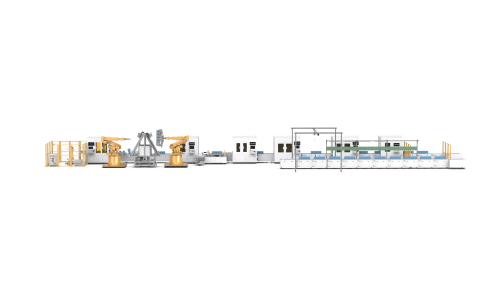
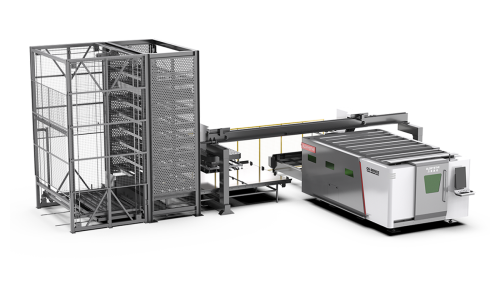
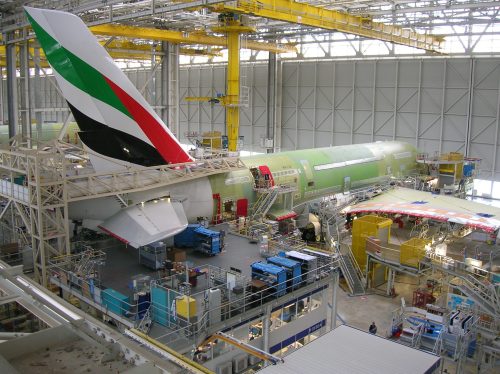
For shipyard owners and senior decision-makers, discussions around new manufacturing technologies increasingly focus on laser cutting cost per vessel rather than individual machine performance. While flame and plasma cutting systems remain widely used and familiar, rising labor costs, tighter delivery schedules, and margin pressure are forcing shipbuilders to reassess whether traditional cutting methods still support competitive vessel-level economics.
In modern shipyards, the cutting process no longer operates in isolation. Every decision made at the cutting stage directly affects downstream efficiency, quality, and financial performance.
Why Laser Cutting Cost per Vessel Is a Strategic Metric
Shipbuilding profitability is measured at the vessel level, not at individual workstations. A cutting process that appears economical on an hourly basis may ultimately increase the laser cutting cost per vessel when its impact on welding, assembly, and rework is taken into account.
Laser cutting introduces higher dimensional accuracy and process consistency, which influences the entire production chain. When evaluated from a system perspective, the cost benefits of laser cutting often extend far beyond the cutting department itself.
Material Utilization: A Critical Factor in Laser Cutting Cost per Vessel
Steel represents one of the largest cost components in shipbuilding. Even small improvements in material efficiency can significantly influence the laser cutting cost per vessel.
Laser cutting enables tighter nesting, narrower kerf widths, and greater repeatability across batches. These advantages reduce scrap rates and help shipyards maintain stable material consumption, especially when steel prices fluctuate.
Over multiple vessels, incremental material savings accumulate into substantial cost reductions, directly improving project margins and long-term financial stability.
Labor Efficiency and the Reduction of Non-Value-Added Work
Labor availability and cost volatility remain major challenges for shipyards worldwide. Traditional cutting methods often require extensive manual intervention after cutting, including grinding, edge correction, and fit-up adjustment. These activities contribute little to final product value but significantly increase the laser cutting cost per vessel.
Laser cutting minimizes heat-affected zones and produces cleaner edges, allowing components to move directly into welding and assembly. As a result, shipyards experience reduced reliance on highly skilled corrective labor and improved production predictability.
This shift is particularly important in regions facing skilled labor shortages, where labor risk has become a strategic concern rather than a purely operational issue.
Welding Performance and Assembly Accuracy
Cutting quality directly determines welding efficiency. Poor fit-up increases welding time, inspection requirements, and the likelihood of defects, all of which inflate the laser cutting cost per vessel over the life of a project.
Laser-cut components provide consistent joint geometry, enabling welders to maintain stable welding parameters and reduce interruptions. Improved fit-up also simplifies assembly sequencing, reducing delays and congestion in downstream workstations.
In practice, many shipyards find that improvements in welding productivity deliver greater cost savings than gains achieved at the cutting stage alone.
Delivery Time, Cash Flow, and Capacity Utilization
From a management perspective, delivery time is closely tied to financial performance. Faster and more predictable cutting operations help prevent production bottlenecks, supporting smoother workflow and reduced lead times.
Shorter build cycles reduce the laser cutting cost per vessel by improving cash flow and increasing annual throughput without expanding facilities or workforce size. Earlier delivery milestones also reduce financial exposure and strengthen customer confidence.
For decision-makers, these benefits often outweigh direct operating cost comparisons between cutting technologies.
Technology Investment and Long-Term Cost Stability
Although laser cutting requires higher initial investment, it offers long-term cost stability by reducing dependency on manual correction and operator experience. Consistent process quality lowers quality risk and simplifies production planning, contributing to a more predictable laser cutting cost per vessel.
As shipyards pursue digitalization and automation strategies, laser cutting systems integrate more easily with production planning software, nesting optimization tools, and data-driven quality control systems.
When Laser Cutting Cost per Vessel Delivers the Greatest Value
Laser cutting delivers the strongest financial impact when:
High dimensional accuracy improves welding efficiency
Labor availability is constrained
Delivery schedules are tightly controlled
Material utilization directly affects margins
In many cases, shipyards adopt a hybrid approach, combining laser cutting with plasma or flame cutting for less critical components. This strategy balances investment with operational flexibility while optimizing laser cutting cost per vessel across the production process.
Conclusion: A Financial Decision Beyond Cutting Speed
Laser cutting does not always offer the lowest cutting cost per hour. However, when evaluated through the lens of laser cutting cost per vessel, it frequently proves to be the most cost-effective solution for modern shipyards.
By reducing material waste, labor-intensive rework, welding inefficiencies, and delivery delays, laser cutting becomes a strategic tool for controlling total vessel cost rather than a simple equipment upgrade.
For shipbuilders focused on long-term competitiveness, the real question is no longer whether laser cutting is technically capable, but whether traditional cutting methods continue to support sustainable vessel-level economics.