Introduction
In today’ s fabrication industry, standard round and square tubes are no longer the only materials manufacturers process. Furniture frames, fitness equipment, automotive structures, and architectural components increasingly rely on oval, elliptical, rectangular, and custom-extruded profiles. These non-standard geometries demand higher precision and stability during processing. This is where special tube laser cutting becomes essential. Unlike conventional mechanical or adapted cutting systems, laser-based tube solutions are engineered to handle irregular profiles with accuracy, consistency, and production efficiency.
The Real Difficulty Behind Special-Shaped Tubes
Irregular tubes create problems that are often underestimated during equipment selection. While the outer shape may appear manageable, the internal production challenges are significant:
1. Rotational Instability
Non-symmetrical profiles do not rotate evenly. Even minor imbalance can cause vibration, leading to dimensional deviation or poor edge quality.
2. Alignment Errors
Unlike round tubes, special-shaped tubes lack a uniform reference surface. Improper positioning can result in inconsistent hole placement and misaligned joints during assembly.
3. Variable Wall Thickness
Custom extrusions often feature uneven wall structures, which require precise power adjustment to avoid burn-through or incomplete cuts.
4. Secondary Processing Costs
Traditional cutting methods frequently require grinding, drilling, or reworking to achieve acceptable tolerance levels. This adds time and labor costs to mass production.
These issues explain why many manufacturers transitioning into irregular tube production experience unexpected bottlenecks.
Why Laser Technology Performs Better
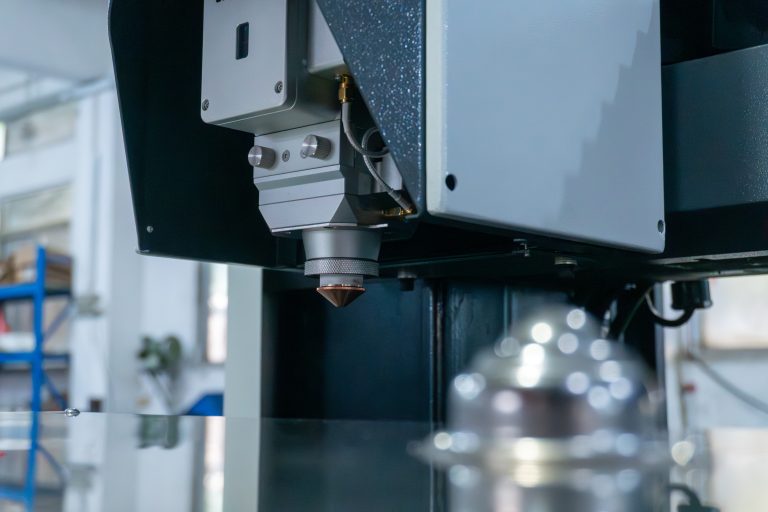
The advantage of special tube laser cutting lies in its precision control and adaptability. Fiber laser systems designed specifically for tube processing offer several critical improvements over traditional methods.
Stable Multi-Axis Control
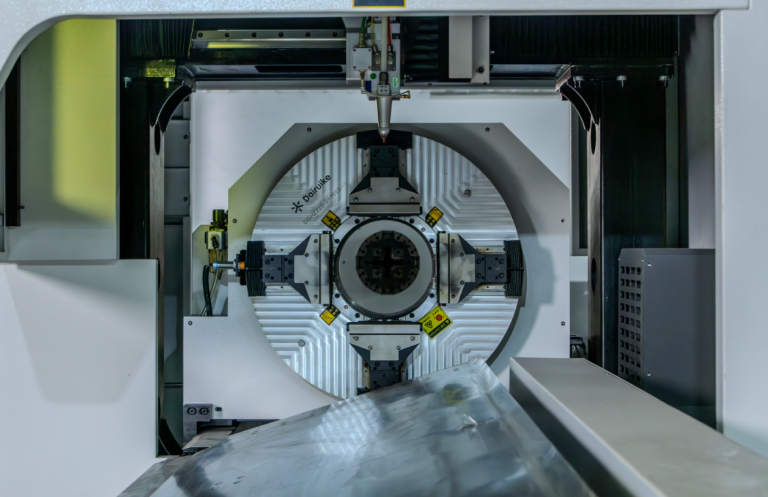
Dedicated tube laser machines utilize synchronized rotational chucks that maintain consistent torque and alignment. This ensures stable processing even for oval or asymmetric profiles.
Dynamic Position Compensation
Advanced control systems can automatically adjust for minor profile deviations. Instead of treating each tube as identical, the machine compensates in real time, improving repeatability across large production batches.
Clean, High-Quality Edges
Laser cutting produces narrow kerf widths and minimal heat-affected zones. For special-shaped tubes used in visible structural applications, edge quality directly influences final product aesthetics.
Reduced Tool Wear
Unlike mechanical cutting tools, lasers do not rely on physical contact. This eliminates tool wear concerns when processing harder materials such as stainless steel.
Best Practices for Mass Production of Special Tubes
To maximize efficiency in special-shaped tube fabrication, manufacturers should focus on process optimization rather than machine power alone.
Optimize Cutting Parameters
Laser power, cutting speed, and assist gas must match the tube’s material and geometry. For example:
Carbon steel may benefit from oxygen-assisted cutting for faster throughput.
Stainless steel typically requires nitrogen for cleaner, oxidation-free edges.
Thin-walled profiles demand careful speed control to prevent deformation.
Fine-tuning these parameters significantly improves consistency.
Ensure Proper Clamping
Secure and adaptive clamping systems are critical. Adjustable chucks that accommodate various profile shapes reduce vibration and maintain concentric rotation. Poor clamping is often the hidden cause of inconsistent results in special tube laser cutting operations.
Integrate Automation
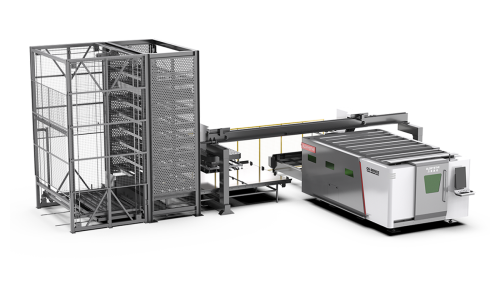
For manufacturers operating in medium to high volumes, automated loading systems reduce downtime between batches. Consistent feeding also improves production rhythm and safety.
Impact on Downstream Assembly
One of the most overlooked benefits of precision tube laser processing is its effect on downstream operations. When irregular tubes are cut accurately:
Welding gaps are minimized.
Assembly alignment improves.
Structural integrity becomes more predictable.
Cosmetic finishing requires less rework.
In industries where aesthetics and dimensional precision matter, this can significantly enhance brand quality perception.
More importantly, consistency in special tube laser cutting stabilizes the entire production workflow. Instead of correcting errors later, manufacturers control quality at the source.
Choosing the Right Tube Laser System
When evaluating equipment for irregular tube production, manufacturers should prioritize machines engineered specifically for tube applications. Key considerations include:
High-precision rotary chuck systems
Stable multi-axis synchronization
Software capable of handling complex contour paths
Compatibility with automation solutions
Proven stability when processing stainless steel and carbon steel
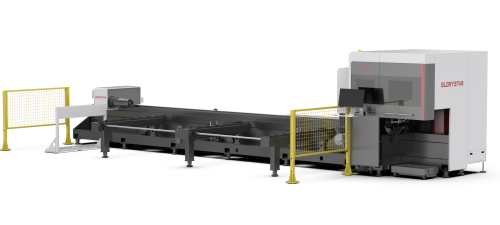
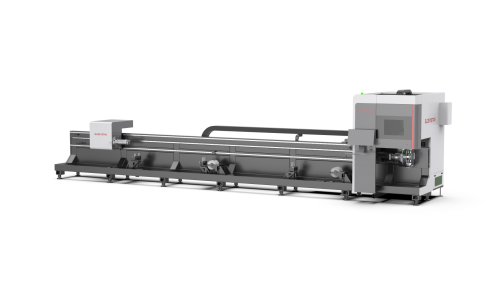
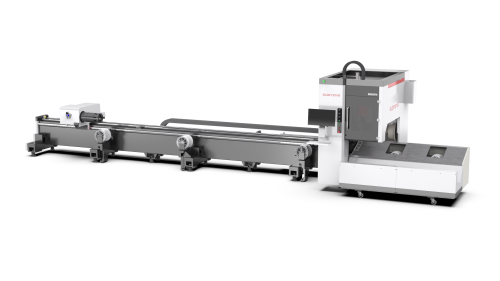
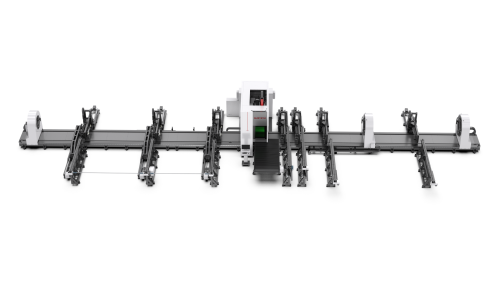
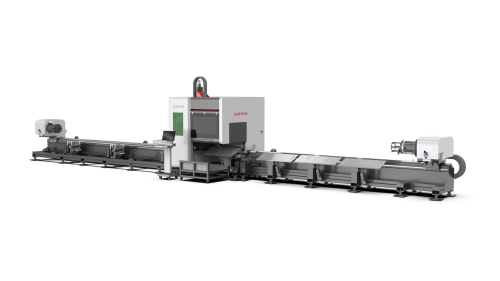
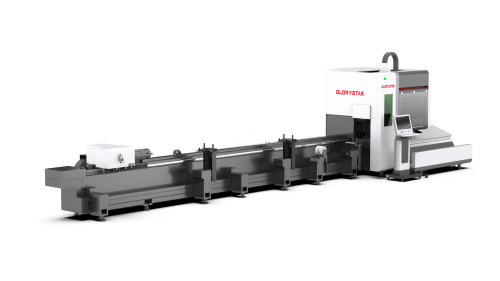
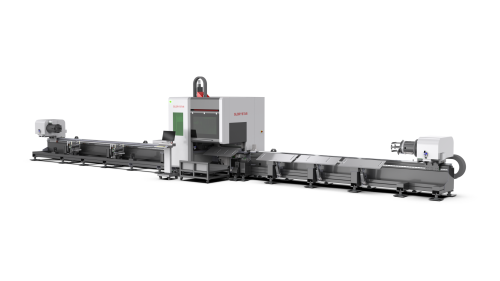
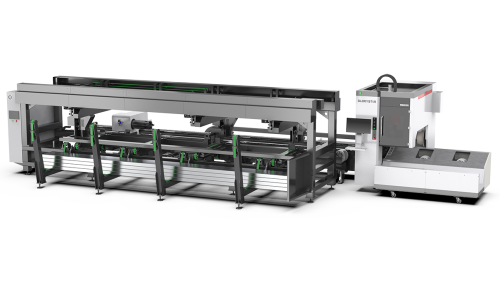
A purpose-built tube laser cutting machine ensures long-term performance in demanding production environments. Rather than adapting a sheet-based system for tube work, dedicated solutions deliver better stability and efficiency for special profiles.
Conclusion
As product designs become more sophisticated, irregular tube structures are becoming standard across multiple industries. Meeting this demand requires more than traditional cutting methods—it requires precision-driven technology.
Special tube laser cutting provides the accuracy, flexibility, and repeatability necessary to process complex tube geometries at scale. By combining optimized parameters, stable clamping systems, and advanced control software, manufacturers can reduce waste, improve assembly quality, and maintain consistent output in competitive markets.
For companies aiming to strengthen their capabilities in irregular tube fabrication, investing in dedicated tube laser technology is not just an equipment upgrade—it is a strategic production decision.