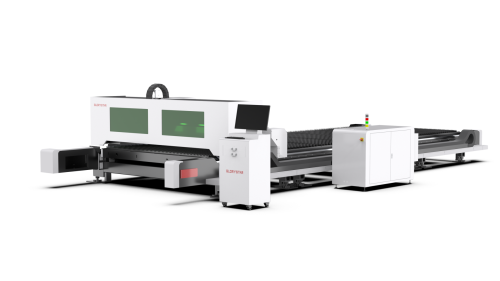
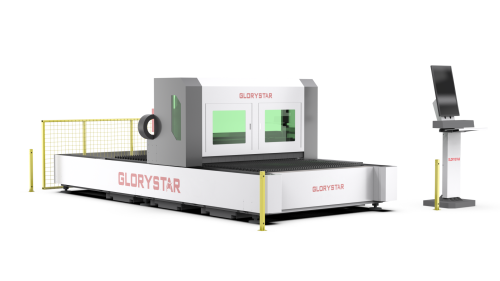
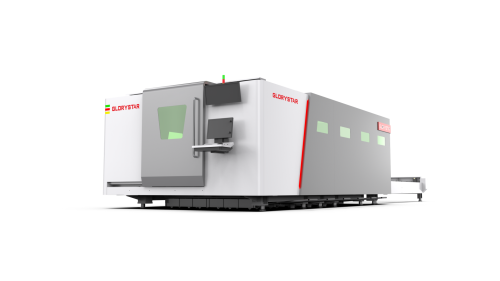
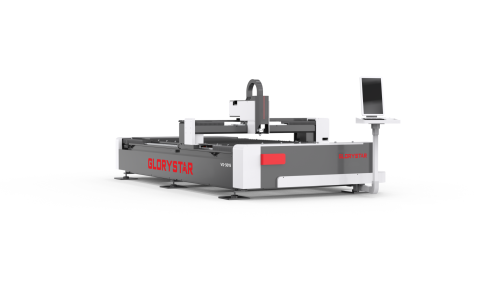
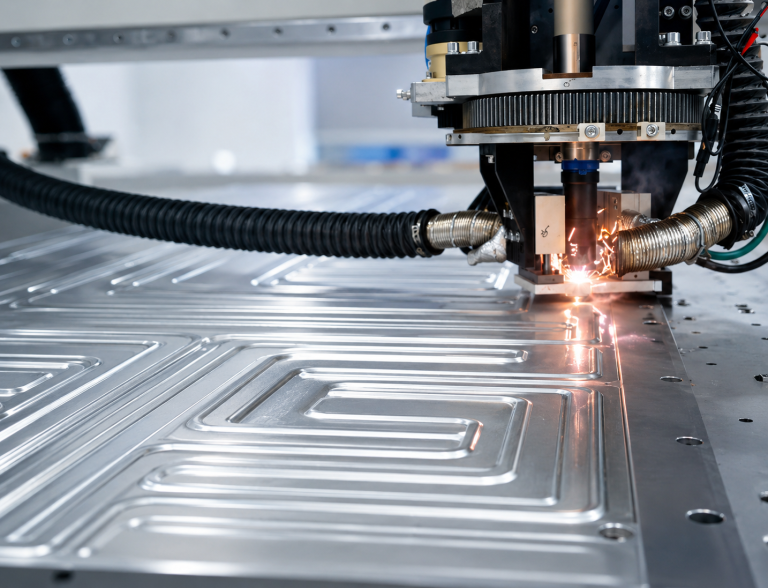
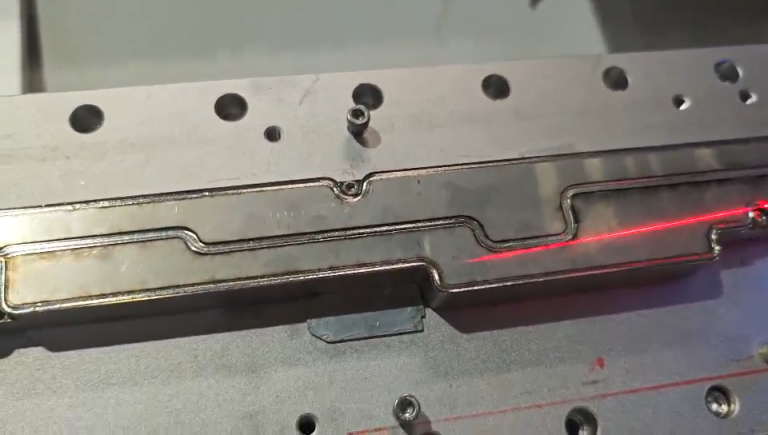
As demand for liquid cooling systems continues to grow in AI servers, high-performance computing, electric vehicles, and energy storage, manufacturers are facing higher requirements for welding speed, precision, consistency, and production efficiency. Choosing the right liquid cooling welding equipment has therefore become an important factor in achieving stable and efficient mass production.
For manufacturers producing liquid cooling plates, manifolds, and other cooling components, the right welding equipment should do more than create a strong weld. It should provide reliable sealing, consistent quality, high production efficiency, and the flexibility needed for different production requirements.
What Makes Liquid Cooling Welding Equipment Suitable for Mass Production?
Mass production requires welding equipment to operate continuously while maintaining stable welding quality. Equipment designed for laboratory testing or small-batch production may not provide the same level of efficiency and consistency required by large-scale manufacturing.
When evaluating liquid cooling welding equipment, manufacturers should consider several key factors, including welding speed, positioning accuracy, weld consistency, equipment stability, automation, and compatibility with different liquid cooling components.
A well-designed system can help manufacturers reduce manual operations, improve production efficiency, and maintain consistent weld quality across large production volumes.
1. Welding Speed and Production Efficiency
Welding speed is one of the most important factors when selecting equipment for mass production.
Liquid cooling components often contain multiple welding areas, and slow welding processes can significantly increase production cycle time. High-performance laser welding equipment can provide fast and precise welding while reducing unnecessary processing time.
When comparing liquid cooling welding equipment, manufacturers should look beyond the maximum laser power. Welding speed, scanning efficiency, positioning time, workpiece loading, and unloading should all be considered as part of the overall production cycle.
For high-volume manufacturing, even a small reduction in cycle time can result in significant productivity improvements over thousands of components.
2. Welding Precision and Consistency
Liquid cooling components require accurate and reliable welding because poor weld quality can lead to leakage and product failure.
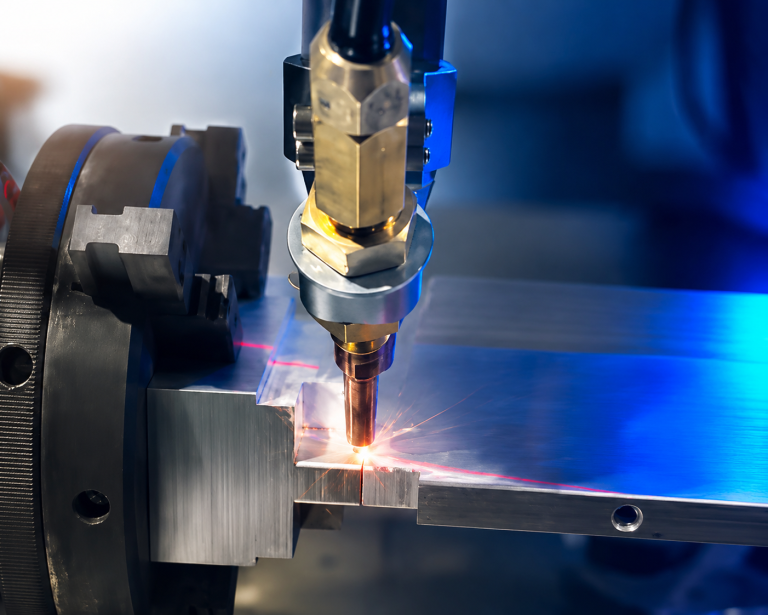
Laser welding provides a concentrated heat source, allowing manufacturers to achieve precise and controlled welding with a relatively small heat-affected area. However, equipment configuration also plays an important role in maintaining consistent results.
A suitable liquid cooling welding equipment solution should provide stable laser output, accurate positioning, reliable motion control, and repeatable welding parameters.
For mass production, consistency is just as important as welding speed. The equipment should be capable of producing similar weld quality from the first component to the last.
3. Airtightness and Weld Quality
Airtightness is a critical requirement for liquid cooling components. A small welding defect may result in coolant leakage during operation.
Therefore, manufacturers should evaluate how the welding equipment controls penetration, heat input, welding speed, and beam movement.
High-quality liquid cooling welding equipment can help create stable and uniform weld seams, supporting the sealing requirements of liquid cooling plates, manifolds, and other components.
The welding process should also be compatible with subsequent inspection methods, such as leak testing and visual inspection, to help manufacturers establish a complete quality-control process.
4. Automation for High-Volume Production
Automation becomes increasingly important as production volume increases.
Manual loading, positioning, and welding can increase labor requirements and introduce variations between operators. Automated welding systems can reduce these variations while improving production efficiency.
Depending on production requirements, manufacturers may consider features such as:
Automatic loading and unloading
Automatic positioning
Vision-assisted positioning
Dual-station welding
Programmable welding parameters
Automated workpiece handling
Integration with production lines
For manufacturers producing large quantities of liquid cooling components, automation can make liquid cooling welding equipment more efficient and easier to scale.
5. Single-Station vs Dual-Station Equipment
Workstation configuration can have a direct impact on production efficiency.
A single-station system may be suitable for lower production volumes or applications requiring frequent product changes. A dual-station system can allow operators to load or unload one workpiece while welding takes place at the other station.
This can reduce idle time and improve machine utilization.
When choosing liquid cooling welding equipment, manufacturers should therefore consider not only the welding process but also how the machine will fit into the entire production workflow.
6. Flexibility for Different Liquid Cooling Components
Liquid cooling manufacturers may produce different components, including liquid cooling plates, manifolds, pipes, and other cooling assemblies.
A suitable welding system should provide enough flexibility to handle different workpiece sizes, materials, welding paths, and production requirements.
Programmable welding parameters and flexible fixture designs can make it easier to switch between different products without significantly affecting production efficiency.
This flexibility is particularly valuable for manufacturers producing multiple liquid cooling products or serving different customers.
7. Machine Stability and Long-Term Operation
Mass production places higher demands on equipment stability.
A machine may perform well during a short demonstration, but manufacturers need to consider how it performs during long periods of continuous operation.
Important factors include laser source stability, motion system reliability, cooling performance, control system stability, and ease of maintenance.
Reliable liquid cooling welding equipment should maintain consistent welding performance throughout extended production periods while minimizing unexpected downtime.
8. How to Select the Right Equipment for Mass Production
Before purchasing equipment, manufacturers should evaluate their actual production requirements.
Key questions include:
What liquid cooling components will be welded?
What materials and thicknesses are involved?
What is the required production volume?
What welding speed is required?
What level of airtightness is required?
Is automatic loading and unloading necessary?
Would a dual-station system improve productivity?
How much flexibility is needed for different products?
What level of quality inspection is required?
By answering these questions, manufacturers can better match equipment configuration with their production goals.
Conclusion
Choosing the right liquid cooling welding equipment is essential for manufacturers planning high-volume production. Welding speed, precision, consistency, airtightness, automation, flexibility, and long-term stability should all be considered before making a purchasing decision.
The best equipment is not necessarily the machine with the highest laser power. Instead, it should provide the right combination of welding performance, production efficiency, automation, and reliability for the manufacturer's specific application.
For manufacturers producing liquid cooling plates, manifolds, and other cooling components, selecting a suitable laser welding solution can help improve production efficiency, maintain stable weld quality, and support long-term mass production.