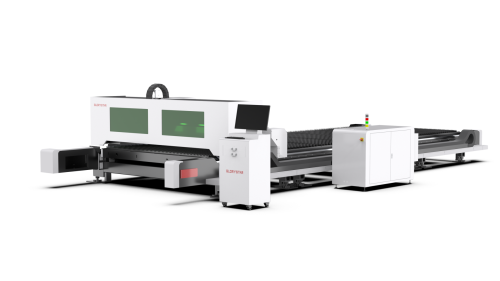
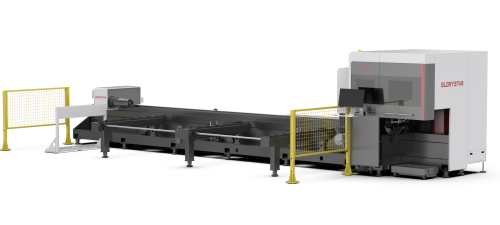
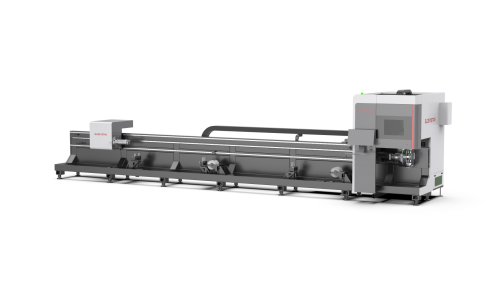
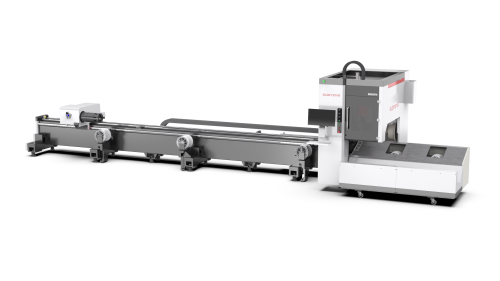
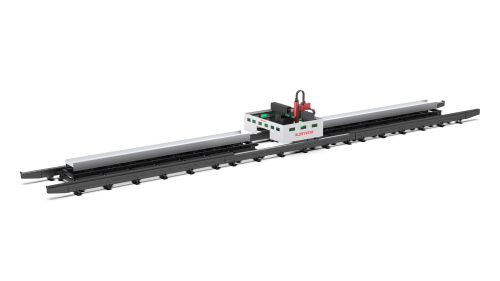
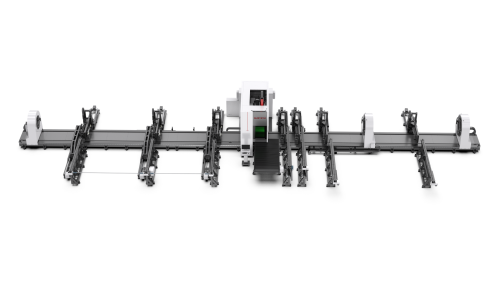
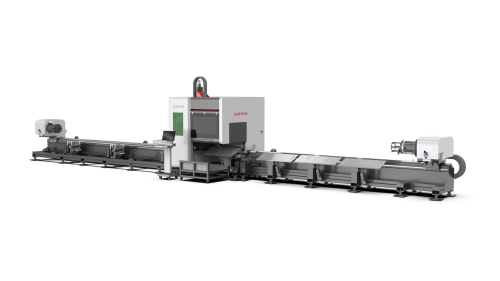
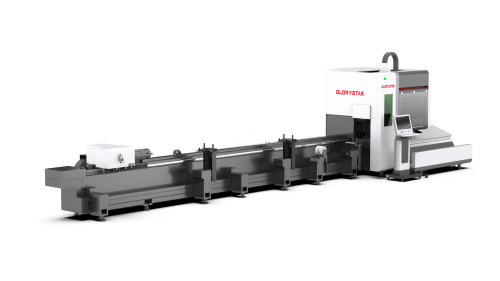
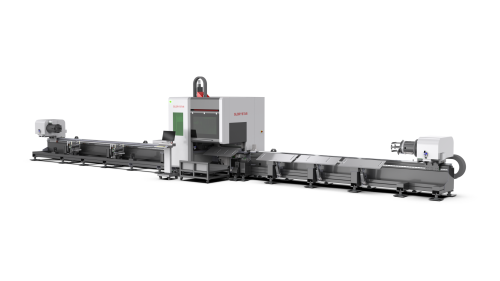
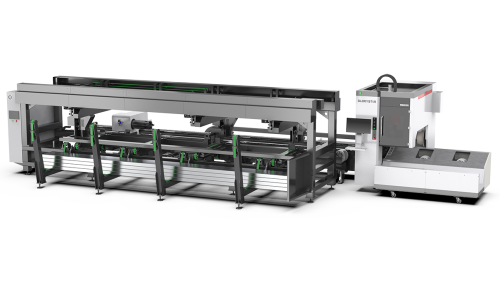
Choosing the right tube cutting machine is not simply about selecting the machine with the largest number of chucks. Dual-chuck, triple-chuck, and quad-chuck configurations each offer different levels of material support, cutting stability, and production flexibility. For manufacturers processing metal tubes and profiles, the better choice depends on tube length, diameter, weight, material thickness, cutting requirements, and production volume.
Why Does Chuck Configuration Matter?
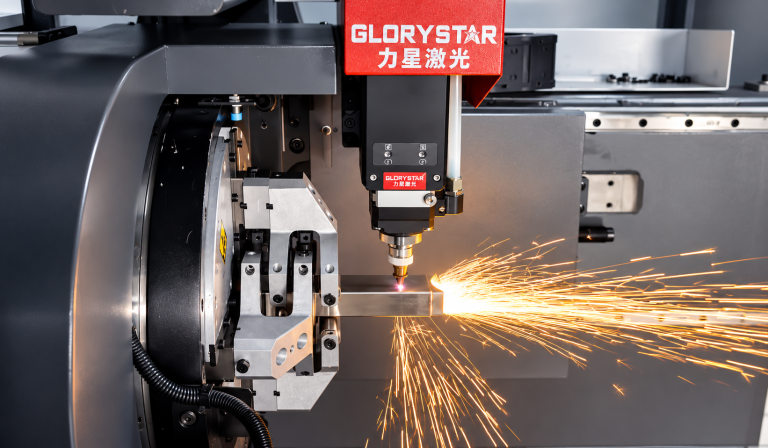
During laser tube cutting, the chuck system holds and rotates the workpiece while the laser head performs the cutting process. As tube length and weight increase, maintaining stable positioning becomes more challenging.
A machine with additional chucks can provide more support along the workpiece. This can help reduce unwanted movement, improve rotational stability, and maintain consistent cutting performance, particularly when processing long or heavy tubes.
However, more chucks do not automatically mean a better machine. If your production mainly involves short or medium-length tubes, choosing a more complex configuration may add investment without providing meaningful benefits.
The goal is to match the tube cutting machine to your actual production requirements.
Dual-Chuck Tube Cutting Machine: A Practical Choice for General Production
A dual-chuck configuration is widely suitable for general tube and profile cutting applications. With two chucks supporting the workpiece, the machine can provide stable clamping and efficient material rotation for many standard production tasks.
This configuration can be a good fit for manufacturers processing common round, square, rectangular, and other profiles where tube length and weight remain within the machine's working range.
Another advantage is its relatively straightforward configuration. For companies looking to introduce laser tube cutting or upgrade from traditional processing methods, a dual-chuck tube cutting machine can provide a practical balance between machine capability and investment.
It is especially suitable when:
Most tubes are short or medium length
Material weight is moderate
Production requirements are relatively standard
Flexible tube and profile processing is important
Investment needs to remain under control
Triple-Chuck Tube Cutting Machine: More Support for Longer Tubes
When workpieces become longer or heavier, additional support can become increasingly important. A triple-chuck configuration adds another clamping point to improve material stability during cutting and rotation.
This can be particularly useful when manufacturers regularly process longer tubes, larger profiles, or materials that are more difficult to keep stable with fewer support points.
For these applications, a triple-chuck tube cutting machine can help reduce unwanted movement during processing and provide better control over the workpiece.
Manufacturers should consider this configuration when:
Tube lengths are relatively long
Workpieces are heavier or larger
Cutting accuracy needs to remain consistent along the tube
Production involves more demanding profiles
Material stability is a recurring concern
The key point is that the additional chuck should solve a real production problem rather than simply increase the machine specification.
Quad-Chuck Tube Cutting Machine: Designed for More Demanding Applications
A quad-chuck configuration provides even more support and control for challenging tube-cutting applications. With additional clamping points, the workpiece can be supported more effectively during rotation and cutting.
This configuration can be valuable for manufacturers processing long, heavy, or large-section tubes and profiles where workpiece stability is particularly important.
A quad-chuck tube cutting machine may be worth considering when production involves:
Long and heavy metal tubes
Large structural profiles
More demanding cutting operations
Higher requirements for positioning stability
Production where material movement can significantly affect results
For high-volume industrial production, the additional support can also become valuable when consistent processing is required across a large number of workpieces.
Dual vs. Triple vs. Quad Chuck: Which One Should You Choose?
The right choice depends on the materials and production conditions rather than the number of chucks alone.
If your factory mainly processes standard tubes and profiles with moderate dimensions, a dual-chuck machine may provide everything you need. If longer or heavier workpieces are common, a triple-chuck configuration can provide additional support. For demanding applications involving long, heavy, or large-section materials, a quad-chuck machine may offer greater stability.
Before purchasing a tube cutting machine, consider these questions:
What are the maximum and minimum tube lengths?
What tube diameters and profile sizes do you process?
How heavy are your typical workpieces?
What materials and wall thicknesses are involved?
How complex are the cutting patterns?
What production volume do you expect?
How important are cutting consistency and positioning stability?
These factors provide a much better basis for machine selection than simply choosing the configuration with the most chucks.
Choose the Right Tube Cutting Machine for Your Production
A dual-chuck, triple-chuck, or quad-chuck configuration can each be the right solution under different production conditions. The best tube cutting machine is not necessarily the one with the most chucks, but the one that provides sufficient material support, cutting stability, and production efficiency for your specific workload.
For manufacturers comparing different tube laser cutting solutions, evaluating the complete machine configuration is essential. Chuck design, working range, laser power, cutting head, material handling, and automation capabilities should all work together to meet production requirements.
With the right configuration, manufacturers can improve tube processing efficiency while avoiding unnecessary investment in machine features they may not actually need.