Plasma cutting and flame cutting have been widely used in metal fabrication for decades. In many regions, especially in North America and other mature industrial markets, these technologies became standard solutions for cutting carbon steel plates and structural components.
However, manufacturing environments are changing. Rising labor costs, higher quality expectations, and increasing demand for automation are pushing fabrication shops to rethink traditional cutting methods. As a result, the comparison of laser cutting vs plasma cutting is becoming a central topic for manufacturers planning equipment upgrades or process optimization.
Laser cutting does not aim to replace every thermal cutting process, but in many practical applications, it has become a more efficient and future-ready alternative.
Laser Cutting vs Plasma Cutting in Today ’ s Fabrication Environment
In the past, plasma and flame cutting were chosen primarily for their ability to cut thick materials at relatively low equipment cost. Speed and cutting capacity were often the main priorities.
Today, manufacturers face different challenges. Customers expect tighter tolerances, better edge quality, and shorter delivery times. At the same time, fabrication shops must control operating costs and reduce dependency on skilled manual labor.
This shift in priorities has made laser cutting vs plasma cutting a strategic decision rather than a purely technical one.
Precision and Edge Quality: A Key Difference
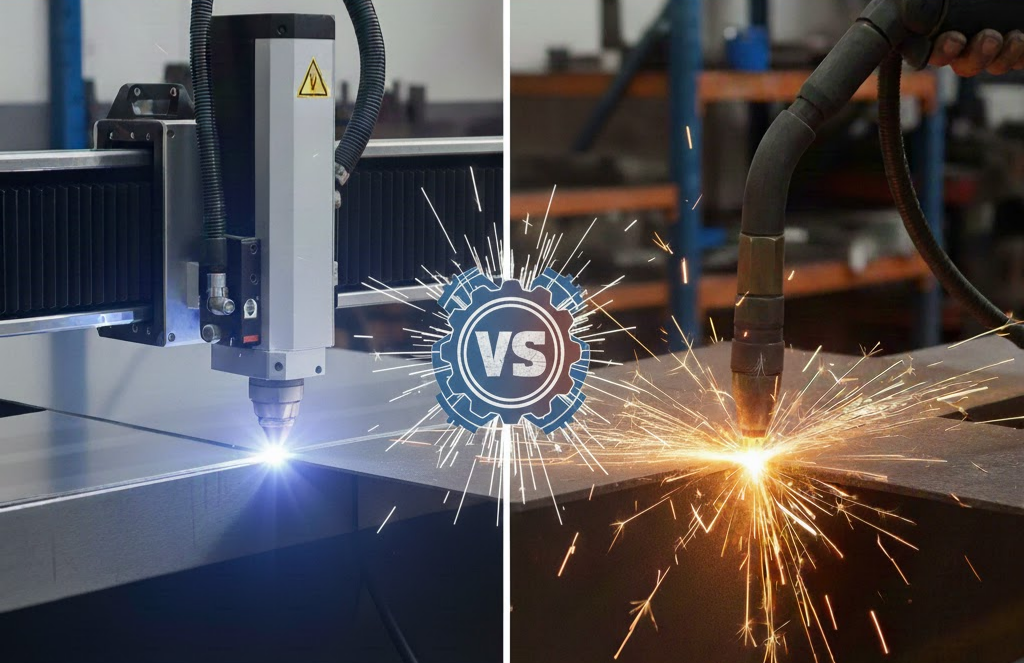
One of the most noticeable differences between laser cutting and plasma cutting is precision. Plasma cutting is effective for rapid material separation, but it typically produces a wider kerf, a larger heat-affected zone, and less consistent edge quality.
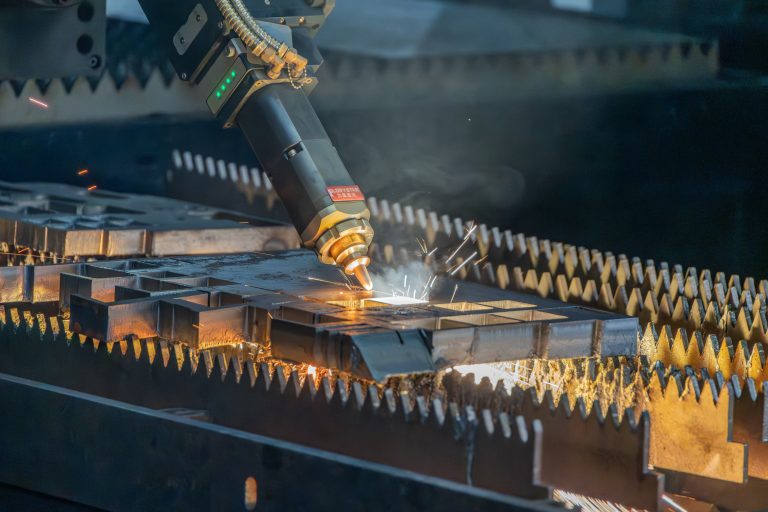
These characteristics often require additional grinding or edge preparation before welding or assembly. In contrast, laser cutting delivers narrow kerf widths, smooth edges, and minimal thermal distortion.
For manufacturers producing parts that require accurate dimensions, clean edges, or tight fit-up, laser cutting offers a clear advantage over plasma and flame cutting.
Reducing Secondary Operations and Labor Dependency
Secondary operations are a major hidden cost in plasma and flame cutting processes. Parts frequently need post-processing such as grinding, straightening, or slag removal. These steps increase labor requirements and slow down production flow.
Laser cutting significantly reduces the need for secondary processing. In many cases, parts can move directly from cutting to bending, welding, or assembly. This not only improves productivity but also allows shops to reallocate labor to higher-value tasks.
In discussions of laser cutting vs plasma cutting, the reduction of manual finishing work is often one of the strongest arguments in favor of laser technology.
Material Versatility and Stainless Steel Processing
Plasma and flame cutting remain suitable for thick carbon steel, but they are less effective when processing stainless steel or thin-to-medium thickness plates. Issues such as oxidation, edge roughness, and excessive heat input can negatively impact part quality.
Laser cutting offers superior control over heat input and cutting stability. When processing stainless steel, laser cutting produces clean, oxidation-free edges and consistent results. This simplifies downstream processes such as welding and improves the overall appearance of finished parts.
For shops that handle a wide range of materials, laser cutting provides greater versatility and more predictable quality.
Automation and Digital Workflow Integration
Another important difference between laser cutting and traditional cutting methods lies in automation. Plasma and flame cutting systems often depend heavily on operator experience and manual handling. Automation and digital integration can be limited.
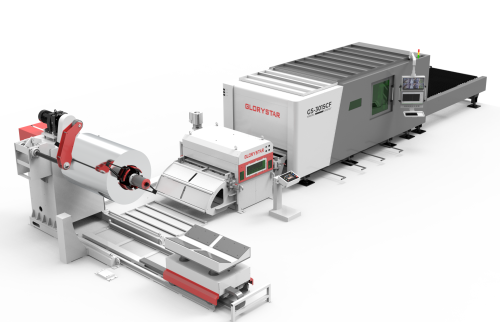
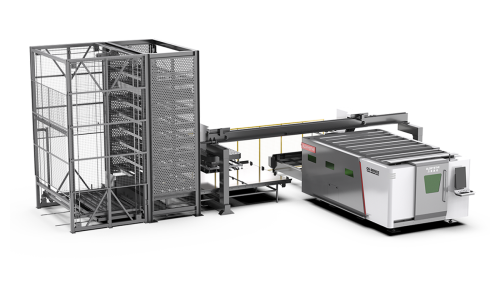
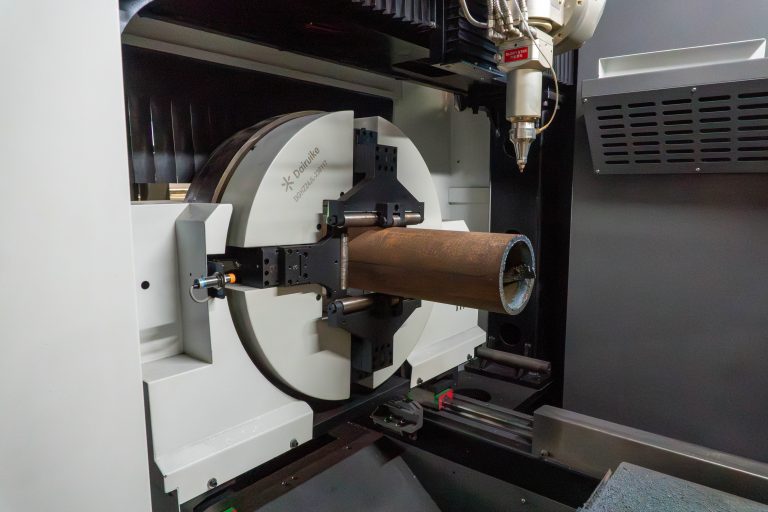
Modern laser cutting systems are designed to work seamlessly with automated loading and unloading, nesting software, and production management systems. This enables more stable production, better material utilization, and improved scheduling accuracy.
From a long-term perspective, laser cutting provides a stronger foundation for smart manufacturing and digitalized production workflows.
Laser Cutting vs Plasma Cutting: Cost Beyond the Machine Price
Plasma and flame cutting machines often appear more affordable due to lower initial investment. However, equipment price alone does not reflect total operating cost.
Labor, material waste, energy consumption, and secondary processing all contribute to long-term expenses. When these factors are considered, laser cutting often demonstrates a lower total cost of ownership, especially in precision-driven or high-volume environments.
In many real-world cases, the higher upfront investment in laser cutting is offset by increased efficiency, reduced labor costs, and improved part quality.
When Plasma or Flame Cutting Still Has an Advantage
Despite the advantages of laser cutting, plasma and flame cutting are not obsolete. They remain practical solutions for very thick carbon steel or applications where precision and edge quality are not critical.
The goal is not to eliminate traditional cutting technologies, but to apply each method where it performs best. Understanding the strengths and limitations of each process helps manufacturers build a balanced and efficient production strategy.
Choosing the Right Cutting Technology for the Future
As manufacturing continues to evolve, laser cutting is increasingly being adopted as a replacement for plasma and flame cutting in applications that demand precision, efficiency, automation, and long-term cost control.
By understanding the real differences in laser cutting vs plasma cutting, manufacturers can make informed decisions that support sustainable growth and future production needs.