Fiber laser cutting assist gas plays an important role in determining cutting quality, processing efficiency, and operating costs. For manufacturers considering a fiber laser cutting machine, one common question is: What gas should be used for cutting different metals?
The main gases used in fiber laser cutting are oxygen, nitrogen, and compressed air. In certain specialized applications, argon may also be used. Each gas has different properties and is suitable for different materials, thicknesses, and surface quality requirements. Understanding these differences can help manufacturers choose the right cutting process and avoid unnecessary production costs.
1. What Are the Main Gases Used in Fiber Laser Cutting?
Different assist gases affect the cutting process in different ways. The three most commonly used options are oxygen, nitrogen, and compressed air.
Oxygen: Commonly Used for Carbon Steel
Oxygen is widely used when cutting carbon steel. During the cutting process, oxygen reacts with the heated metal and produces an exothermic reaction. This additional heat supports the cutting process and helps process thicker carbon steel plates.
Oxygen cutting is often selected when processing carbon steel where productivity and cutting capacity are important. However, because oxygen participates in the reaction, the cut edge usually has an oxidized surface. This may require additional cleaning or surface treatment before welding, painting, or other downstream operations.
Nitrogen: Suitable for Stainless Steel and Aluminum
Nitrogen is an inert assist gas commonly used for stainless steel and aluminum cutting. Unlike oxygen, it does not significantly react with the molten metal during normal cutting conditions.
Nitrogen helps blow molten material away from the cutting kerf while reducing oxidation on the cut surface. This makes it suitable for applications that require clean edges, good surface appearance, or minimal post-processing.
However, nitrogen cutting generally requires higher gas pressure and a reliable gas supply. Its consumption and supply costs should therefore be considered when evaluating long-term production expenses.
Compressed Air: A Cost-Conscious Option for Certain Applications
Compressed air contains approximately 78% nitrogen and 21% oxygen, along with small amounts of other gases and moisture. It can be used for cutting certain thin or medium-thickness materials, depending on the laser power, material type, and required edge quality.
One advantage of compressed air is that it can reduce dependence on purchased nitrogen or oxygen. This may help lower gas costs in suitable production environments.
However, compressed air is not equivalent to high-purity nitrogen. Its oxygen content can cause oxidation, while moisture and oil contamination may affect cutting performance. A properly sized air compressor and filtration and drying system are important for stable results.
2. Which Assist Gas Should You Choose for Different Materials?
The right laser cutting assist gas depends on more than the material itself. Plate thickness, laser power, cutting speed, edge quality, and subsequent processing requirements also matter.
Here is a general reference:
Carbon steel: Oxygen is commonly used, especially when cutting thicker plates. Nitrogen or compressed air may be considered for specific applications requiring different edge conditions.
Stainless steel: Nitrogen is widely used when a clean, low-oxidation edge is required. Compressed air may be suitable for some cost-sensitive applications.
Aluminum: Nitrogen is commonly selected to reduce oxidation and support clean cutting results. Compressed air may be considered depending on the application.
Brass and copper: Nitrogen is often used, but the appropriate process depends on material thickness, reflectivity, laser configuration, and cutting parameters.
These are general recommendations rather than fixed rules. Before choosing a gas, manufacturers should conduct cutting tests using their actual materials and production requirements.
3. How Does Assist Gas Affect Cutting Quality and Cost?
Choosing the right gas is not simply about whether the machine can cut through a metal plate. It also affects the finished edge and the total cost of production.
Cutting edge quality: Oxygen can leave an oxidized edge on carbon steel, while nitrogen is often preferred when oxidation needs to be minimized. The choice can influence whether additional cleaning is required.
Cutting speed and thickness: Oxygen supports the cutting reaction when processing carbon steel. Nitrogen cutting relies more heavily on laser energy and gas pressure to remove molten material. Actual cutting speed depends on several factors, including laser power, material thickness, nozzle design, and process parameters.
Gas consumption: Nitrogen cutting can involve relatively high gas pressure and consumption. Compressed air may reduce purchased gas expenses, but the cost of compression, filtration, drying, and maintenance should also be included.
Overall production costs: The cheapest gas per unit is not always the most economical choice. Manufacturers should consider gas consumption, cutting speed, edge quality, post-processing, and production stability together.
4. What Should You Check Before Using Laser Cutting Assist Gas?
A stable gas supply is essential for consistent cutting results. Before starting production, manufacturers should pay attention to several factors.
Gas purity: Impurities, moisture, and oil can affect cutting stability and edge quality. The required purity depends on the material and cutting process.
Gas pressure: Pressure must match the material, thickness, nozzle, and cutting parameters. Excessive or insufficient pressure can affect the removal of molten material.
Nozzle condition: A damaged, contaminated, or incorrectly centered nozzle may cause uneven gas flow and inconsistent cutting results.
Gas supply capacity: The gas supply system must provide sufficient pressure and flow throughout the cutting process, particularly during continuous production.
It is also important to monitor gas pressure during operation. A sudden pressure drop can affect cutting quality and may lead to processing interruptions.
5. How Can a Fiber Laser Cutting Machine Support Stable Gas Control?
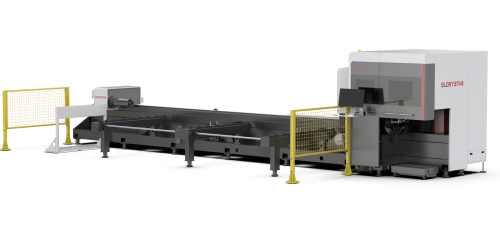
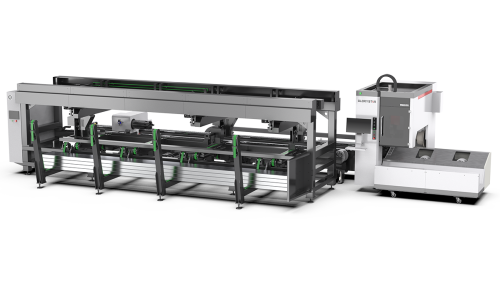
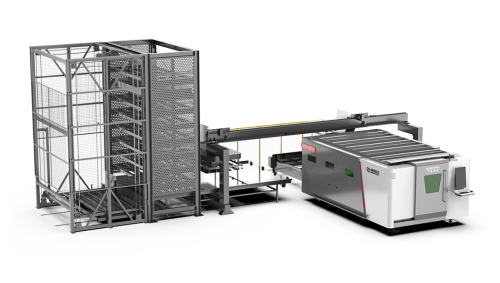
A suitable fiber laser cutting machine should provide more than sufficient laser power. Its cutting head, control system, gas supply configuration, and monitoring functions all contribute to process stability.
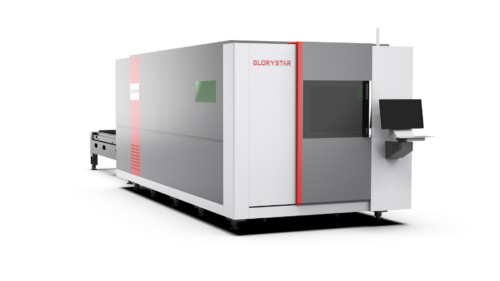
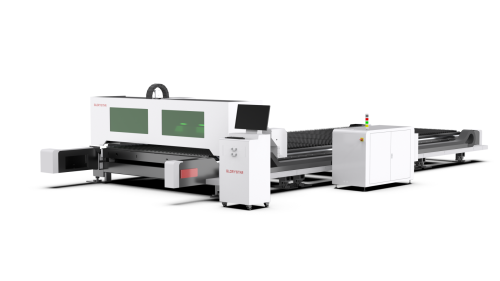
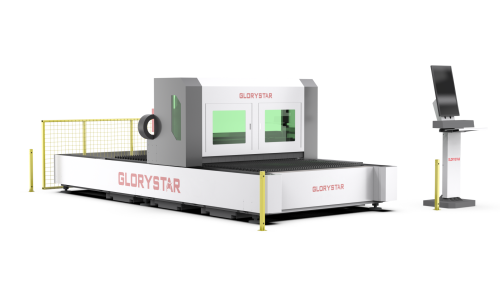
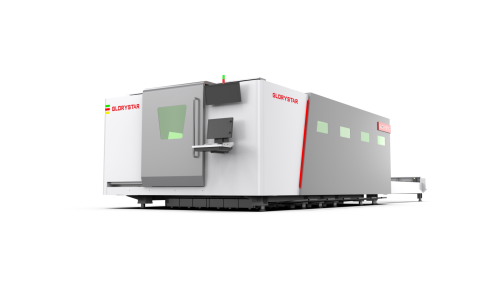
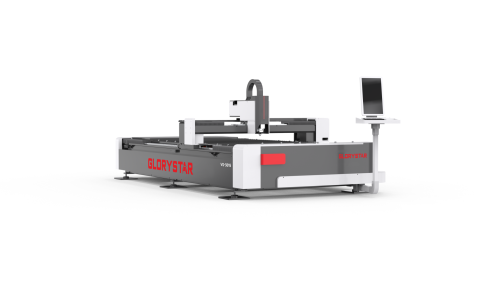
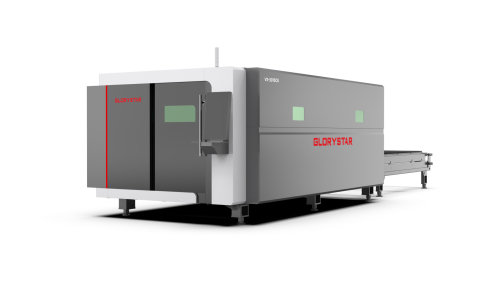
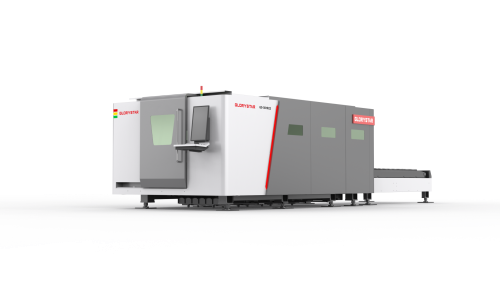
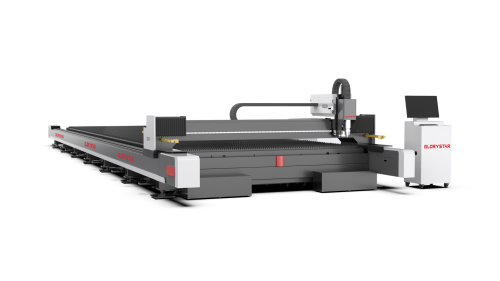
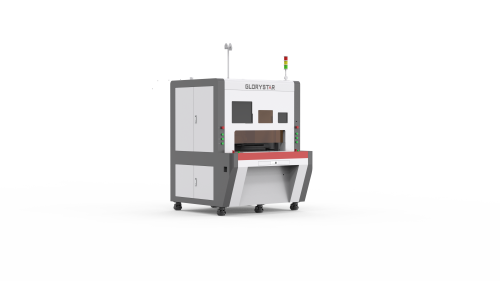
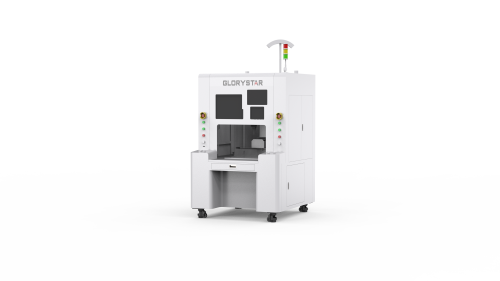
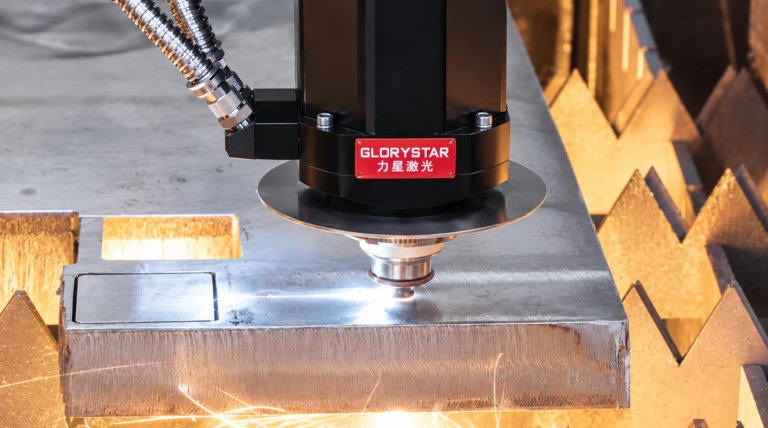
For example, the Glorystar GS-3015CS integrates an intelligent cutting head with air pressure monitoring and other protective functions. These features help operators monitor important cutting conditions and identify potential issues during production.
Its FSCUT EtherCAT bus control system also provides access to cutting processes and machine operating information, helping operators manage different processing requirements more efficiently.
For manufacturers handling multiple metal materials and plate thicknesses, selecting a machine with suitable process controls and monitoring functions can make it easier to maintain consistent production quality.
Conclusion
The most commonly used gases for fiber laser cutting are oxygen, nitrogen, and compressed air. Oxygen is widely used for carbon steel, nitrogen is preferred for many applications requiring low-oxidation edges, and compressed air can be a cost-conscious option for suitable materials and thicknesses.
There is no single gas that works best for every cutting application. Manufacturers should evaluate material type, thickness, edge quality, gas consumption, and downstream processing requirements before making a decision.
Choosing the right laser cutting assist gas, together with a properly configured fiber laser cutting machine, helps improve production consistency and control overall processing costs.